Abstract art has always fascinated me because it allows us to communicate emotions, memories, and experiences without relying on literal representation. Over the years, many collectors and art enthusiasts have asked me what defines my artistic style and what inspires the pieces they see in my collection.
While every artwork I create is unique, there are certain elements that consistently shape my approach. My work is rooted in abstraction, but it is also deeply connected to nature, movement, texture, and the emotional responses that color and composition can evoke.
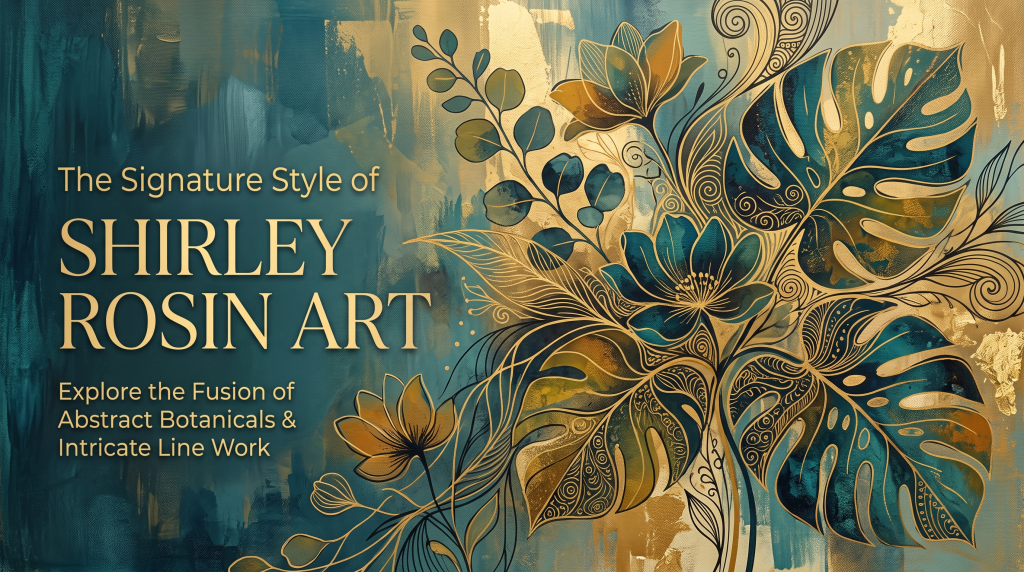
In this article, I’d like to share a closer look at the signature style behind Shirley Rosin Art and the creative philosophy that guides my work.
For me, abstract art offers a freedom that traditional representation cannot.
Rather than telling viewers exactly what they should see, abstract artwork invites personal interpretation. Two people can stand in front of the same painting and experience entirely different emotions, memories, or stories. That openness is what makes abstract art so powerful.
When I paint, I am not trying to recreate a landscape, object, or scene exactly as it appears. Instead, I focus on capturing a feeling, an atmosphere, or a moment of inspiration. The result is artwork that encourages viewers to slow down, reflect, and connect with the piece in their own way.
Nature plays a significant role in my creative process.
Many of my abstract compositions are inspired by landscapes, oceans, skies, changing seasons, and natural textures. I often find inspiration in the subtle shifts of light during sunrise, the movement of clouds, or the layered colors found in coastal environments.
This connection with nature is also what draws many viewers to landscape abstract wall art, where colors, textures, and organic forms can transform a space and create a calm, inspiring atmosphere. Rather than painting these elements realistically, I translate their essence into abstract forms, flowing lines, layered textures, and harmonious color palettes.
This approach allows me to preserve the emotional experience of nature while creating artwork that feels contemporary and timeless.
One of the defining characteristics of my work is the intentional use of color.
Color has the ability to influence mood almost instantly. Soft neutrals can create a sense of calm and balance, while deeper tones introduce drama, energy, and contrast.
When developing a new piece, I spend considerable time refining the color relationships within the composition. Every shade serves a purpose.
I often layer colors repeatedly to create depth and complexity. What may appear simple from a distance often reveals subtle variations and hidden details when viewed up close.
My goal is not simply to create something visually appealing, but to create an emotional experience through color.
Texture is another element that has become a signature part of my artistic style.
I believe artwork should engage viewers beyond color alone. Texture adds dimension, movement, and visual interest that changes depending on the lighting and viewing angle.
Many of my pieces involve layered applications of paint, creating surfaces that invite closer observation. These textured details bring a sense of authenticity and craftsmanship to the artwork while helping each piece feel unique.
Collectors often tell me that they discover something new every time they look at a painting. That layered experience is something I intentionally strive to achieve.
One concept I constantly explore is movement.
Although a painting is static, I want viewers to feel a sense of motion within the composition. This may be expressed through sweeping brushstrokes, flowing forms, layered textures, or the interaction between colors.
Movement creates energy and guides the viewer’s eye across the artwork. It prevents the composition from feeling stagnant and helps establish a natural rhythm within the piece.
Even in my most calming works, there is often an underlying sense of movement that keeps the painting alive.
One of the greatest challenges in creating an abstract art painting is knowing when to stop.
Many people assume abstract paintings are spontaneous, but in reality, they often require thoughtful editing, refinement, and careful decision-making. Every mark, layer, and compositional choice contributes to the final result, shaping the emotion and meaning behind the artwork.
I strive to create a balance between complexity and simplicity. Too much detail can overwhelm a piece, while too little can leave it feeling incomplete.
Finding that balance is often where the most meaningful work emerges, allowing an abstract art painting to feel both expressive and thoughtfully created.
Every artist hopes their work creates a connection.
When someone brings one of my paintings into their home, my hope is that it offers more than decoration. I want it to become part of the atmosphere of the space, a source of inspiration, reflection, comfort, or curiosity.
Abstract art allows room for personal interpretation, and I consider that one of its greatest strengths. There is no right or wrong way to experience a piece. The meaning often evolves over time as viewers bring their own experiences and perspectives to the artwork.
At its core, the signature style of Shirley Rosin Art is about creating emotional connections through abstraction.
My work combines influences from nature, layered textures, thoughtful color relationships, and a continual exploration of movement and balance. Each painting is created with the intention of offering viewers a moment of pause in an increasingly busy world.
Abstract art does not provide all the answers. Instead, it invites exploration, interpretation, and personal discovery. That invitation is what continues to inspire me as an artist, and it remains at the heart of every piece I create.
Written By
Shirley Rosin